


Dr. Berke Özücer specializes in Selective Myectomies, an advanced surgical technique designed to restore natural facial expressions and reduce involuntary co-contractions (synkinesis) that often occur after facial paralysis. This microsurgical approach precisely targets and weakens specific hyperactive muscles, bringing harmony back to facial movements. Patients benefit from improved symmetry, enhanced comfort, and a renewed sense of confidence in their social interactions.
Understanding Selective Myectomies
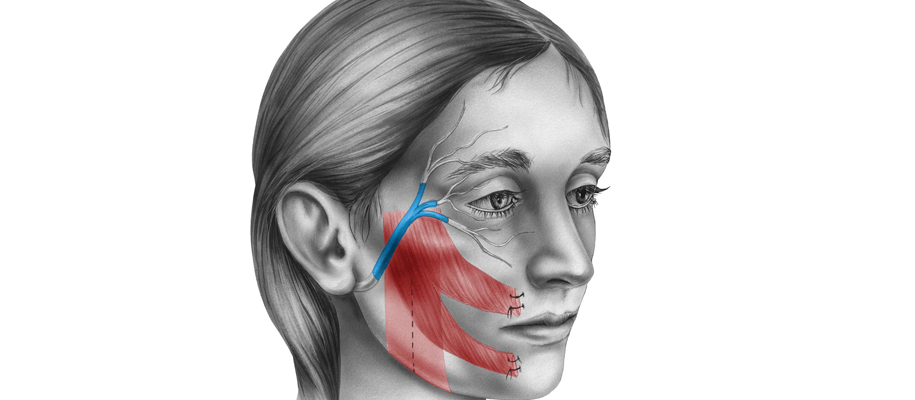
Selective Myectomy involves the careful removal or weakening of small portions of specific facial muscles responsible for unwanted movements. Dr. Özücer's innovative techniques ensure minimal tissue damage, promoting a comfortable recovery and exceptional aesthetic outcomes, ultimately leading to a more dynamic and aesthetically harmonious facial appearance.
What is Selective Myectomy Surgery?
It is a technique that aims to improve muscle contractions around the eyes, mouth and neck after synkinesia. In this technique, certain muscle groups that control the facial muscles are targeted and weakened. In this way, unwanted contractions of the facial muscles in patients are reduced and the patient's quality of life is further improved. After these procedures, scars may remain for a while. This is a normal situation and there is no need to worry. With regular and proper wound care, you can get rid of selective myectomies surgery scars in a short time.
How is Selective Myectomy Surgery Performed?
Selective Myectomy is a meticulously planned and executed procedure that Dr. Berke Özücer performs with advanced microsurgical precision. The process involves several key stages:
Pre-operative Assessment and Planning
- Detailed Facial Analysis: Dr. Özücer conducts a thorough assessment of the patient's facial muscles, often utilizing advanced imaging and electromyography (EMG) to pinpoint the exact muscles and muscle fibers causing synkinetic movements.
- Personalized Treatment Plan: Based on the analysis, a customized surgical plan is developed, identifying the precise areas for muscle modification to achieve the most natural and symmetrical outcome.
The Surgical Procedure
- Anesthesia: The procedure is typically performed under local anesthesia with sedation or general anesthesia, ensuring patient comfort.
- Micro-incisions: Dr. Özücer makes very small, discreet incisions, often hidden within natural facial creases or hair lines, minimizing visible scarring.
- Targeted Muscle Modification: Using specialized microsurgical instruments, the identified hyperactive muscle fibers are carefully transected or partially removed. This precision prevents damage to surrounding healthy tissues and nerves.
- Intraoperative Monitoring: Advanced nerve monitoring techniques may be employed during surgery to ensure the safety and preservation of critical facial nerve branches.
The duration of the surgery can vary depending on the extent of the synkinesis and the number of muscles targeted, but it is generally a swift procedure, often allowing patients to return home on the same day.
Which Muscles Are Most Commonly Targeted in Myectomies?
- Depressor Anguli Oris Muscle
The Depressor Anguli Oris Muscle, known as the depressor muscle of the corner of the mouth muscle, is a muscle with a very strong synkinetic side. therefore, in case of a possible paralysis, it pulls the smile aesthetics of the person downwards. In cases of paralysis in the depressor anguli oris muscles located in the corners of the mouth area, the muscle is targeted and removed. Thus, problems in the patient's smile aesthetics are improved.
- Depressor Labii inferioris Muscle
The Depressor Labii inferioris Muscle, also known as the lower lip depressor muscle, is slightly weaker on the synkinetic side, so the activity of the same muscle on the normal side creates asymmetry. For this reason, it can cause possible symmetry and involuntary contractions when the person laughs or speaks. To completely eliminate this problem, myectomy is performed by targeting the depressor labii inferioris muscle. This allows the patient to move more comfortably when smiling or eating.
- Buccinator Muscle
The buccinator facial muscle, located in the innermost part of the cheek, is in a very tense state in patients with synkinesia. This level of tension sometimes prevents the patient from smiling and sometimes causes the patient to involuntarily bite the inside of the cheek. In these cases, the buccinator muscle is sufficiently stimulated and removed to reduce the tension in the muscle. Thus, the tension level in the patient's mouth muscles is eliminated and the patient can smile freely.
Selective Myectomy vs. Targeted Muscle Destruction: What's the Difference?
While both Selective Myectomy and Targeted Muscle Destruction aim to improve facial function after paralysis, they differ significantly in their approach, scope, and objectives:
Selective Myectomy
- Method: Involves the precise, partial removal or transection of specific hyperactive muscle fibers. The goal is to reduce unwanted contractions while preserving overall muscle function where possible.
- Scope: Primarily addresses synkinesis by 'fine-tuning' muscle activity.
- Impact: Aims for restoration of more natural and balanced facial expressions.
- Reversibility/Adjustability: Generally considered a permanent modification, but its precision minimizes collateral impact.
Targeted Muscle Destruction (e.g., Neurolysis, Chemodenervation)
- Method: Can involve various techniques such as chemical denervation (Botulinum toxin injections) to weaken or temporarily paralyze muscles, or surgical neurolysis to disrupt nerve supply to specific muscles.
- Scope: Can be used for broader muscle weakening or paralysis, sometimes addressing muscle spasms or hypertonicity beyond synkinesis.
- Impact: May lead to more significant muscle weakening or paralysis, requiring careful dosing/targeting.
- Reversibility/Adjustability: Botulinum toxin is temporary and repeatable. Surgical neurolysis is more permanent but may carry higher risks if not precise.
Dr. Özücer will discuss which approach is most suitable based on your individual condition and goals.
Advantages of Selective Myectomy
Selective Myectomy offers numerous benefits for patients suffering from synkinesis after facial paralysis:
- Restored Facial Symmetry: Significantly reduces involuntary movements and brings greater balance to the face.
- Enhanced Natural Expressions: Allows for more controlled and natural smiles, eye closures, and other facial movements.
- Improved Social Confidence: Patients often report a dramatic increase in self-esteem and reduced social anxiety.
- Functional Improvements: Can alleviate issues like involuntary cheek biting, eye irritation, or discomfort during eating/speaking.
- Long-lasting Results: Offers a more permanent solution compared to temporary treatments like Botulinum toxin.
- Minimal Scarring: Performed with micro-incisions strategically placed to be virtually unnoticeable.
- Personalized Treatment: Tailored to each patient's unique facial anatomy and specific synkinesis patterns.
Why Myectomy for Synkinesia Patients?
Synkinesia is a condition that occurs after facial paralysis and is characterized by the involuntary movement of one muscle, usually the paralyzed one, during the activity of another muscle. For example, when a person tries to close their eyes, their mouth involuntarily pulls away. Since these and similar conditions greatly affect a person's social life, myectomy surgery aims to partially or completely remove or weaken the paralyzed muscle. At this point, the problematic muscle is split and removed. In this way, the activity of the paralyzed muscle causing synkinesis is reduced or prevented and involuntary muscle movements are eliminated.
Before and After Selective Myectomy
You can view our platysma myectomy before and after gallery to see the results of the successful selective myectomy surgery performed by Dr. Be.
How to Choose the Best Selective Myectomy Surgeons in Turkey?
There are many points to consider when choosing the best platysma myectomy surgeon. For this, you need to do detailed research. Because in order to achieve positive results in selective myectomy procedures, it is important to work with surgeons who are experts in their field. Therefore, you should make sure that your doctor is an expert in selective myectomy surgery. You should also make sure that your doctor has performed platysma myectomy procedures on all face types. Finally, it is also very important that they have experience with different techniques in selective myectomy surgeries.
At this point, Dr. Berke Özücer, one of Turkey's best selective myectomy surgeons, stands out with his successful operations and as a surgeon who applies different techniques. Therefore, by contacting Dr. Berke Özücer, one of Turkey's best platysma myectomy surgeons, you can achieve your dream face shape in a healthy way.
Who is the Best Selective Myectomy Surgeon in Turkey?
There are many renowned selective myectomy surgeons in Turkey. These surgeons have performed numerous successful facial nerve palsy operations in their field. Dr. Berke Özücer, one of the renowned selective myectomy surgeons who stands out with his successful work, provides excellent results by giving his patients a natural appearance. Thus, he effortlessly helps his patients achieve the healthy facial appearance they desire.
Berke Özücer, who performs platysma myectomy operations by taking into account his patients' wishes and face types, achieves flawless and excellent results in selective myectomy procedures. If you also want to achieve these results, you can get excellent results by having a preliminary consultation with Berke Özücer, one of Turkey's most renowned selective myectomy surgeons.
Why Doctor Be in Selective Myectomy Technique?
As one of the best facial paralysis treatment surgeons in Turkey, Dr. Be has extensive experience and expertise in the selective myectomy technique and at the same time offers the best and most perfect results to his patients by using the latest technological tools. Thus, by prioritizing patient satisfaction, he has become one of the best facial paralysis treatment clinics in Turkey.
Frequently Asked Questions About Selective Myectomies
What is the recovery time for oral myectomy surgery?
Patients can return home the same day after oral myectomy. However, a period of 2-3 diseases should be expected for complete recovery. During this period, gargling should be done as much as possible and at the same time, hard foods should be avoided. This can speed up the healing process even more.
Where are the incisions made in platysma muscle myectomy?
In platysma muscle myectomy, the incisions are made in the face and neck area. Therefore, the incisions are never noticeable.
What is the recovery time after platysma myectomy?
After the platysma myectomy operation, the patient can stay overnight or return home as desired. However, it takes 2-3 weeks for full recovery to be observed. In order to spend this period healthy and fast, you can do small exercises and eat soft foods at the same time.


