Facial Nerve Damage After Dental Procedures: What’s Normal, What’s Not?
Dental treatments are of great importance for a healthy oral structure and an aesthetic smile. However, in some cases, especially in treatments involving nerves close to the lower jaw area, unwanted complications may occur, albeit rarely. One of the most serious of these is facial nerve damage. These facial nerve damages can lead to serious problems such as loss of sensation, facial expression disorders and even facial paralysis. At this point, the patient's symptoms may need to be closely monitored. At this point, if you are wondering how facial nerve damage develops after dental treatment, what are the symptoms and what treatment methods are applied, you can take a look at our content. In this way, you can have detailed information about nerve damage caused by facial paralysis. We wish you all healthy days and good reading.
Why Facial Nerve Damage Occurs After Dental Treatments?
The main reason for facial nerve damage after dental treatments is that the nerves in the mouth and jaw region are anatomically very close to the teeth and jawbone. Especially the inferior alveolar nerve in the mandible and its branches can be directly or indirectly damaged during procedures such as tooth extraction, implant applications, root canal treatments and maxillofacial surgery. As a result, such damage may occur as a result of excessive pressure on the nerve, cutting, crushing or incorrect injection of local anesthesia. In addition, surgical interventions performed without adequate imaging and planning can also increase the risk of nerve injury and serious complications such as loss of facial sensation, tingling, facial expression disorders and even facial paralysis may develop. Therefore, it is of great importance that both surgical and medical procedures are meticulously planned in dental treatments.
Which dental treatments have a higher risk of facial nerve damage?
When some dental treatments are not planned correctly, certain facial nerve risks may occur. Particular attention should be paid to critical structures such as the mandibular nerve, mental nerve and facial nerve in the lower jaw region. In this context, we can say that dental treatments with high facial nerve damage are as follows;

Lower Wisdom Tooth (Wisdom Tooth) Extraction
Wisdom teeth in the lower jaw are located very close to the mandibular nerve. For this reason, if sufficient care is not taken during tooth extraction, the risk of nerve damage is quite high.
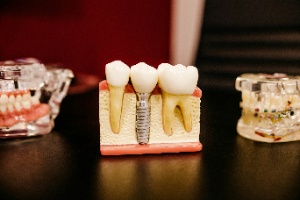
Dental Implant Applications
Especially when placing implants in the lower jaw region, the risk of nerve damage increases as the work is performed close to the nerve canals. Therefore, a detailed panoramic x-ray or 3D CBCT (Cone Beam Computed Tomography) should be taken before implant placement to analyze the position of the nerves and bone structure in detail.

Root Canal (Endodontic) Treatments
Root canal treatments, which are frequently applied today, can also cause facial paralysis if not performed carefully. The main reason for this is that the roots of the teeth are close to the nerves and can put pressure on the nerves.

Jaw Surgery and Orthognathic Surgery
Since surgical procedures involving the jawbone are performed in areas where nerve structures pass, facial nerves may be damaged. For this reason, permanent or temporary disability may occur in the facial area.
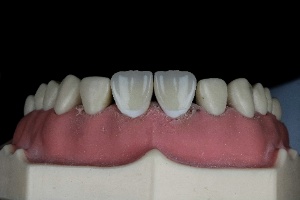
Gum Surgeries and Advanced Periodontal Treatments
In these procedures, damage may occur if care is not taken when the nerve structures are close to the surface. This damage can cause facial paralysis to a great extent.
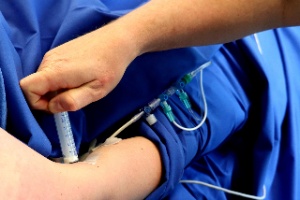
Incorrect Local Anesthesia Practices
Especially in nerve block anesthesia performed in the lower jaw region, direct contact of the needle to the nerve or injection into the nerve can cause permanent damage.
Symptoms of Facial Nerve Damage after Dental Treatment
Symptoms of facial nerve damage after dental treatment may vary depending on the area where the nerve is affected and the severity of the damage. However, the most common symptoms of facial nerve damage after dental treatment are as follows;
- Numbness, tingling or complete loss of sensation in the lip, chin, cheek and tongue areas.
- Weakening of facial expressions, difficulty in laughing or speaking may be observed.
- If facial nerve damage occurs after external treatment, sagging may occur from the corner of the mouth downwards.
- If the facial nerve is affected, inability to close the eyelid completely and dry eyes may develop.
- Due to loss of sensation and muscle weakness in the tongue and surrounding muscles, chewing and speaking may become difficult.
- There may be constant burning, stinging and tingling in the lip and chin area.
- Finally, when some of the mimic muscles stop working, facial features may become markedly asymmetrical.
Prevention of Facial Nerve Damage after Dental Treatment
In order to prevent facial nerve damage after dental treatment, it is of great importance to plan the procedures in detail. For this reason, the position of the nerves and the jaw structure should be analyzed in detail using advanced imaging methods such as panoramic x-rays and preferably 3D CBCT (Cone Beam Computed Tomography) before treatment. These analyzes significantly reduce the risk of nerve damage, especially in procedures performed close to nerves such as implant applications, lower wisdom tooth extractions and root canal treatments. In addition, performing surgical procedures by experienced and specialized physicians, using the correct surgical techniques and appropriate equipment minimizes facial nerve damage that may occur in the facial area. For this reason, make sure that dental treatments are carried out in a planned manner as much as possible. Finally, you should closely monitor the symptoms that may occur after treatment and consult a specialist immediately in cases such as prolonged numbness, loss of sensation or weakness in facial muscles. In this way, early precautions can be taken for all possible risks.
Treatment Methods for Facial Nerve Damage after Dental Treatment
Certain treatment methods can be applied to treat permanent facial nerve damage that occurs after dental treatment. These treatment methods are determined according to the rate of facial damage. Treatment methods that can be applied in this context are as follows;
Facial Nerve Transfer
If facial nerve damage has occurred after dental treatment, a nerve transfer procedure can be performed with microsurgery to restore the function of the facial nerve.

Facial Sling Surgery
After the nerve sagging that occurs after dental treatment, sagging may occur in the facial area. Facial sling surgery can also be performed to treat these sagging.

Asymmetric Brow Lift
If facial asymmetry has occurred to a great extent after the procedure, an asymmetric brow lift operation can be performed to improve this asymmetry.

Golden Eyelid Weight
Nerve damage after dental treatment can sometimes cause the eyelid not to close. In such cases, golden eyelid weights can be placed on the eyelids to ensure that the eyes close and protect the cornea.
Temporalis Muscle Flap
Facial nerve damage can lead to loss of facial mimicry. In order to treat these damage losses, a free muscle transfer procedure can be applied.
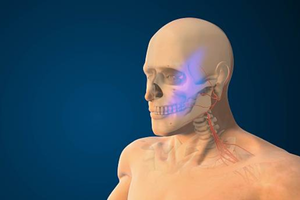
Facial Nerve Damage
Facial nerve damage can sometimes cause immobility around the mouth.
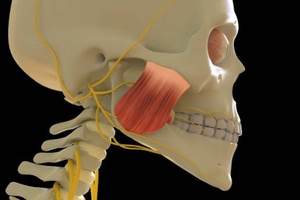

Masseter Muscle Transfer
Masseter muscle transfer can be performed to eliminate oral immobility caused by facial nerve damage. In this way, the function of the chewing muscles can be restored.
If you have experienced facial nerve damage due to incorrect or unplanned dental treatments, you can contact Dr. Be and his team who are experts in Facial Paralysis and Synkinesis.